
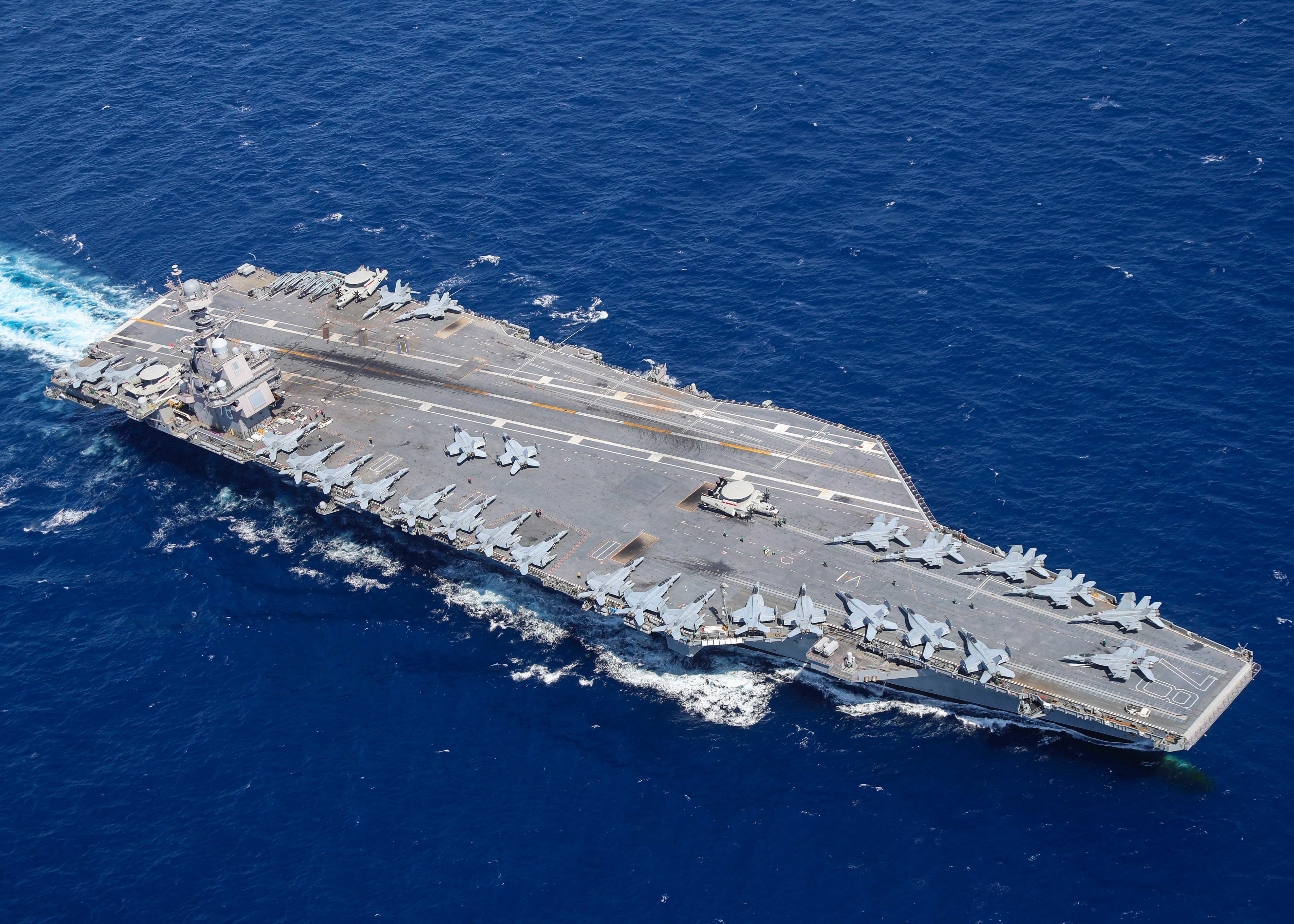
The U.S. is moving its most advanced Aircraft Carrier, the USS Gerald R. Ford, and an accompanying strike group to Latin America under U.S. Southern Command. Officials say the goal is to detect and disrupt illicit actors tied to narcotrafficking and other armed groups. This move is closely followed by a string of boat strikes committed by the United States military against 10 vessels (as of Oct 24, 2025). Most notices of these boat strikes are made public by Pete Hegseth on X.
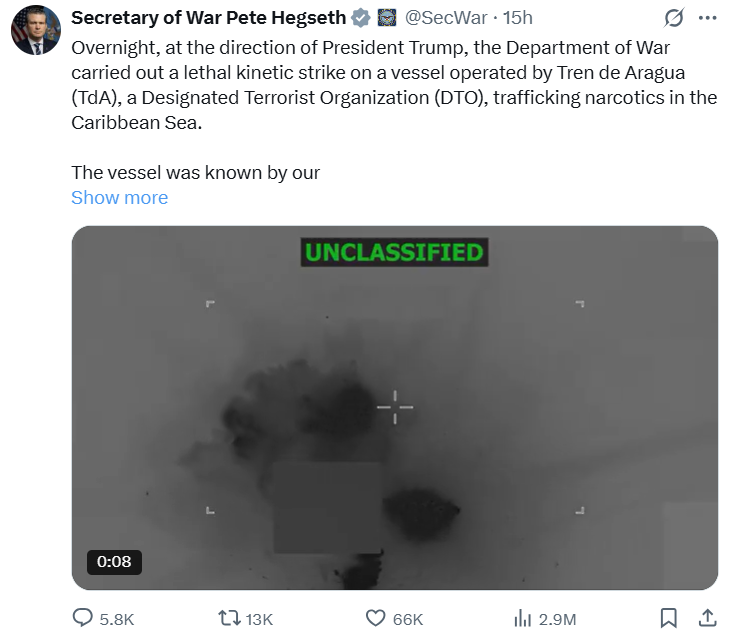
Officials stated strikes are based on classified U.S. intelligence, including CIA feeds connecting boats to cartels like Tren de Aragua. However, the government has not released or made known the corroborating evidence beyond assertions and selected videos of the blasts. Reuters and other outlets have reported survivors in at least one strike and note UN warnings that the operations may amount to extrajudicial executions.
If this is law enforcement, usually, due process is the rule. Outside of war, the standard procedure is arrest, charge and trial. Lethal force (depending what seat of politics you sit on) in the context of due process, is a last resort. If this was an armed conflict different rules would apply, except no credible violent threat or action has been committed by these vessels towards U.S. civilians or U.S. military operatives.