
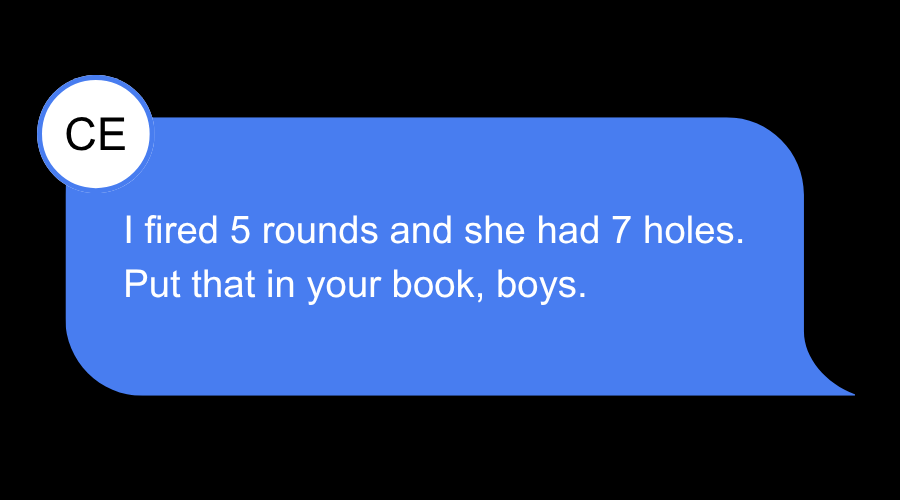
CHICAGO, IL — A U.S. Border Patrol agent who shot a Chicago woman on Oct. 4 allegedly boasted about his marksmanship in group text messages presented in court this week, according to reporting and records discussed at a federal hearing. Reuters identified the agent as Charles Exum and the woman as Marimar Martinez. Martinez and co-defendant Anthony Ian Santos Ruiz were later charged with impeding a federal officer with a deadly weapon, described as her vehicle.
Associated Press reporting on the same hearing said the messages suggested pride in the outcome, with language about how many rounds were fired and the damage caused. Prosecutors have argued the shooting occurred after vehicles driven by Martinez and her co-defendant struck or boxed in agents during an immigration operation in the Brighton Park neighborhood.
Key facts are in dispute. The Department of Homeland Security has said agents were attacked and that Martinez was armed. Defense counsel counters that body-camera footage and witness accounts undercut claims that Martinez drove toward officers before shots were fired. Local reporting has highlighted inconsistencies between DHS statements and available video, and noted that only a subset of agents’ body cameras were recording during the encounter.
Defense attorneys also raised concerns about potential evidence handling. According to Reuters, Exum later drove a damaged SUV connected to the incident more than 1,000 miles to Maine, where it underwent repairs before defense inspection. The FBI photographed the vehicle after the shooting, but statements differed about who authorized subsequent repairs, prompting defense claims of possible spoliation. Exum is also described in filings as a firearms instructor, which the defense says heightens the importance of preserving forensic details.
At an evidentiary hearing this week, Supervisory Border Patrol Agent Charles Exum spent hours on the stand as lawyers confronted him with group-chat messages that appeared to celebrate his marksmanship after the Oct. 4 shooting. The texts included a boastful line about “five shots, seven holes,” according to reporting on the court record; when pressed in court about the phrasing, Exum said he is a firearms instructor and “takes pride” in his shooting skills. He also testified that he retrieved the government SUV involved in the collision only after being told it had been processed and released by investigators, and that he believed it no longer had evidentiary value.
The case is unfolding amid broader scrutiny of federal enforcement tactics in Chicago. On Nov. 6, U.S. District Judge Sara Ellis condemned what she called excessive and unsupported uses of force during immigration operations and issued an injunction restricting chemical agents against nonviolent people, while criticizing sworn statements by a senior Border Patrol leader. That ruling tightened oversight of federal actions while litigation continues.
What is confirmed: the Oct. 4 shooting; the identities of the agent and the woman; the charges against Martinez and her co-defendant; and that text messages attributed to the agent were shown in court and characterized as boasting by multiple outlets.
What is contested: whether Martinez drove at agents, whether she was armed, and whether evidence was properly preserved after the incident. Authorities maintain the agent fired in self-defense; the defense disputes that narrative and points to video and handling of the SUV.
Context: The Oct. 4 incident occurred during heightened immigration enforcement in Chicago that sparked protests and further legal challenges. The judge’s recent order does not resolve the shooting case but signals close judicial scrutiny of federal force in the city. Proceedings continue, and no finding has been made on the criminal charges related to the Oct. 4 episode.