
WASHINGTON, D.C. —
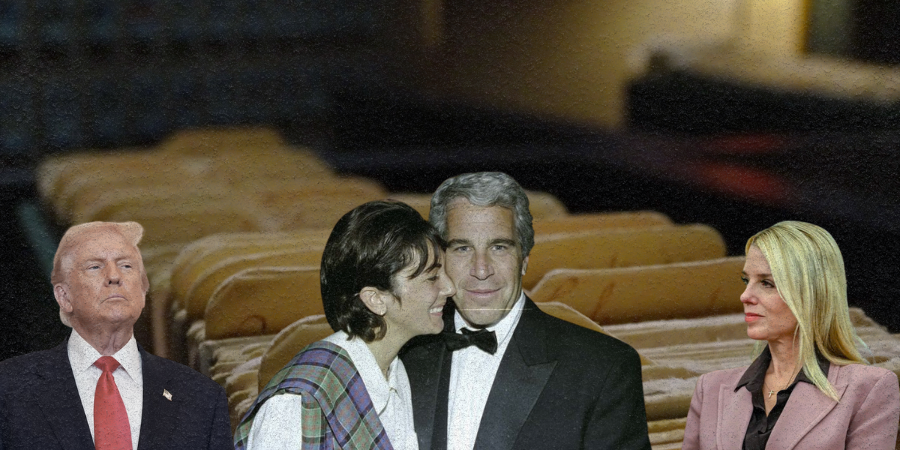
For years, Donald Trump and his allies promised to “open the books” on Jeffrey Epstein. Now, with Congress inching closer to forcing the release of Epstein-related files, the Trump administration is doing the opposite: calling the controversy a “Democrat hoax” and blocking Senate investigators from seeing some of the most detailed financial records.
At the center of the fight is what one senator has called a “big Epstein file” inside the U.S. Treasury Department.
Sen. Ron Wyden, the top Democrat on the Senate Finance Committee, says his staff reviewed portions of a confidential Treasury dossier on Epstein. According to Wyden, that file documents 4,725 wire transfers totaling nearly $1.1 billion flowing in and out of a single Epstein account at JPMorgan, with additional records bringing total flagged Epstein-related transactions to at least $1.5 billion across several banks.
Wyden says the file also includes payments routed through Russian banks that are now under U.S. sanctions and transactions potentially tied to women and girls from countries including Russia, Belarus and Turkey. He argues the material is “full of actionable information” for prosecutors trying to understand how Epstein’s international sex-trafficking operation was funded. Yet the committee still doesn’t have the full file.
A transparency pledge that ran into a locked drawer
Trump campaigned on being “the most transparent president in history” and, during his 2024 run, flirted with the idea of declassifying the Epstein files outright. But once in office, his administration took a very different stance.
In the Congressional Record, Sen. Jeff Merkley recounts that he and Wyden asked Attorney General Pam Bondi, Treasury Secretary Scott Bessent and FBI Director Kash Patel to produce the Epstein file to the Senate Finance Committee multiple times. “They just refused,” Merkley told his colleagues, after reading from Treasury’s written denial.
Wyden has since introduced legislation to force Treasury’s hand. His bill notes that Secretary Bessent has “repeatedly refused” to turn over the full set of Epstein financial records, even though the files contain the names of potential trafficking victims and “individuals whose involvement with Epstein may put them at risk of blackmail or other foreign corruption.”
The Washington Post recently summarized Wyden’s allegation bluntly: Bessent is “directly responsible for the decision to withhold the Epstein files from Congress.”
Trump now calls it a “hoax”
At the same time, Trump has tried to discredit the entire subject.
In July, he told reporters and supporters that the renewed focus on the Epstein case is a “hoax” and a “scam” pushed by Democrats, and suggested his critics are wasting time on something “nobody cares about.”
House and Senate records also show Trump’s allies working behind the scenes to limit disclosure. House Speaker Mike Johnson has criticized efforts to force the release of unredacted files as “reckless,” arguing they could expose unverified names.
Despite that, pressure is building. A bipartisan “Epstein Files Transparency Act” would require the Justice Department to publish all unclassified Epstein-related records in a searchable online archive. A discharge petition to bring that bill to the House floor recently reached 218 signatures, the minimum needed to force a vote.
What we actually know about Trump and the files
Trump’s critics often sprint ahead of the facts. Viral posts have falsely claimed that the Senate Finance Committee found Trump personally sent thousands of wire transfers worth more than $1 billion to Epstein. That is not what Wyden’s documents say, and fact-checkers have labeled the claim false.
Here is what is confirmed by mainstream reporting and official records:
The Treasury “Epstein file” exists and contains thousands of suspicious transactions and at least $1.5 billion in flagged activity tied to Epstein and his network.
Senate Finance staff have only been allowed limited, supervised access to portions of that file; Treasury has refused to give the full set of records to the committee.
Trump now repeatedly describes the Epstein controversy as a “hoax” and “scam,” contradicting his earlier openness to releasing the material.
Reporting by outlets including The Wall Street Journal and The New York Times, summarized by Time, says Trump was told by the Justice Department that his name appears in Epstein-related files. Being named does not prove criminal conduct, but it helps explain his intense interest.
What remains unproven is crucial: we do not yet know what, if anything, those files allege about Trump’s conduct, financial dealings or legal exposure. The Justice Department has said it found no “client list” to support a separate conspiracy theory about systematic blackmail of unnamed elites.
The core hypocrisy question
Taken together, the record leaves an uncomfortable contradiction. On one side:
A president who campaigned on transparency and once hinted he might personally declassify Epstein-related material.
Survivors and lawmakers from both parties demanding to see what’s in the files.
A mounting pile of Treasury records that, according to Wyden, tie Epstein’s money to sanctioned Russian banks, ultra-wealthy patrons and possible trafficking routes across several countries.
On the other:
An administration that refuses to give Congress the full Treasury file, even to closed-door investigators, and dismisses the issue as a partisan stunt.
That tension raises a set of straightforward, pro-democracy questions that only full disclosure can answer:
Why did Trump’s handpicked leadership at Treasury, Justice and the FBI repeatedly decline Senate Finance’s requests for the complete Epstein financial records, after promising openness?
Who, if anyone, instructed those agencies to hold back? Were those decisions made independently by career officials, or at the direction of the White House?
If the case is truly a “hoax,” why not release everything—with appropriate redactions for victims—and let the public see that for themselves?
Do the records contain names, banks or transactions that could embarrass or implicate powerful people in Trump’s orbit, on Wall Street or in politics more broadly?
Until those questions are answered, the contradiction remains stark: an administration that branded itself as transparent is fighting to keep one of the most sensitive corruption and trafficking dossiers in modern history behind a locked cabinet door.
In a democracy, that is not just a curiosity. It is a warning sign.